
Views: 152 Author: Site Editor Publish Time: 2026-09-03 Origin: Site


Control cables act as the central nervous system of automated environments. They transmit low-voltage signals that dictate machine behavior across industrial floors. Selecting the wrong cable introduces severe operational risks. Mismatched flexibility causes mechanical failure in moving machinery. Inadequate shielding leads to signal degradation from electromagnetic interference (EMI). Incorrect jacket materials degrade swiftly when exposed to harsh chemicals or extreme temperatures. These specification failures inevitably result in unplanned downtime and hazardous equipment malfunctions. Facility managers and electrical engineers require a structured evaluation framework to prevent these issues. You must align cable specifications like shielding type, flex rating, and core count with the exact mechanical and environmental demands of your application. This guide breaks down how to specify the right cable for your operational footprint, ensuring long-term reliability and system safety.
Application Specificity: Control cables are purpose-built to transmit operational commands between PLCs, sensors, relays, and motors, differing fundamentally from high-voltage power cables.
Shielding Dictates Reliability: Environments with high electromagnetic interference (EMI) require specific shielding types, such as copper tape or braided shields, to prevent signal corruption.
Motion Defines Construction: The choice between static routing and continuous motion (e.g., drag chains) dictates the required bend radius and jacket material, heavily influencing the lifespan of the cable.
Compliance is Mandatory: Selecting cables that meet regional and industry-specific standards (UL, CE, VDE) mitigates safety risks and ensures regulatory compliance.
A control cable serves a primary triad role in industrial systems. It measures, regulates, and controls transmissions across automated networks. These cables send operational commands from central control panels directly to machinery. They ensure automated systems react instantly to changing variables on the production line. Without this reliable transmission, sensors cannot report data, and actuators cannot execute movements. The entire automation loop depends on the physical integrity of these internal conductors.
We must establish clear boundaries between different cable categories. Power cables carry high voltage and massive current to provide raw energy to motors and heavy equipment. Signal cables carry delicate data at very low voltages, often connecting sensitive IT infrastructure. Control cables sit right in the middle of this spectrum. They carry operational commands to relays, solenoids, and actuators at moderate voltages. In industrial settings, these strict definitions sometimes blur. You might use control cables for light power transmission in switching circuits. Engineers also frequently deploy hybrid cables. These hybrids combine power conductors and control cores within a single jacket to save space in tight conduits.
Your objective during cable selection is straightforward. You want to achieve zero signal loss over the entire cable run. You also need maximum mechanical longevity within a specific operational footprint. Meeting these criteria prevents erratic machine behavior. It also extends maintenance intervals and protects your capital equipment investments. Achieving this requires matching the internal construction of the cable to the external threats of the environment.
Control cables operate in dynamic, high-speed environments. They connect Programmable Logic Controllers (PLCs) to multi-axis robotic arms, switching circuits, and automated guided vehicles (AGVs). These applications demand extreme mechanical resilience. Cables must withstand continuous torsion, rapid acceleration, and tight bending without suffering conductor fatigue. A severed core inside a robotic arm halts production instantly. Engineers specify cables with fine copper stranding, often Class 6, and specialized slip agents like PTFE tape between the cores. This internal construction allows the conductors to glide past each other during rapid movement, preventing friction and heat buildup. You will typically see 18 AWG or 20 AWG conductors used here to maintain flexibility while carrying sufficient signal strength over the robotic arm's length.
Modern assembly lines rely on precise timing and instant feedback loops. Control cables link proximity sensors, pneumatic actuators, and limit switches back to the main control unit. Conveyor systems often expose wiring to industrial lubricants, hydraulic fluids, and constant mechanical abrasion. Food and beverage processing lines introduce high-pressure, high-temperature washdowns. This exposure requires highly specialized, oil-resistant, and moisture-proof jacket materials. Standard plastics absorb these fluids, causing the outer sheath to swell, soften, or crack over time. Once the jacket fails, internal conductors short circuit against the metal conveyor frame, causing immediate system shutdowns. You must match the jacket polymer to the specific chemical exposure of the line.
Commercial building infrastructure uses control cables primarily for static routing. They manage temperature regulation, HVAC control loops, relay commands, and solenoid valve operations. These installations usually run through hidden plenums, drop ceilings, and vertical riser shafts. Therefore, building codes typically require flame-retardant materials. Engineers specify low-smoke zero-halogen (LSZH) jackets for these environments. LSZH materials prevent the emission of toxic, acidic gases during a fire. This protects human occupants during evacuation and prevents corrosive damage to sensitive electronic servers housed in the same building.
Electrical noise disrupts operational commands and corrupts data. Unshielded cables work best for environments with minimal electrical noise and purely static applications. However, industrial manufacturing floors rarely offer such pristine conditions. Variable frequency drives (VFDs), large motors, and welding equipment generate massive electromagnetic fields.
For fixed installations near heavy machinery, you need robust protection. Specifying a copper tape shielded control cable provides 100% coverage against high-frequency electromagnetic interference. The overlapping copper tape acts as an impenetrable barrier to external noise. It absorbs the interference and shunts it safely to the ground. However, copper tape is rigid. It will tear or deform if subjected to repeated bending.
Dynamic applications require a completely different shielding approach. Copper tape fails under constant movement. Here, you should specify a high-flex braided shielded control cable. The tightly woven tinned copper mesh maintains shield integrity while allowing the cable to bend freely. This braided construction provides excellent protection against low-frequency EMI while surviving the continuous movement required in automated machinery and robotic joints.
Solid conductors break easily when bent repeatedly. That is why stranded conductors are the standard for control cables. They allow for necessary routing flexibility inside tight control panels and junction boxes. The thickness of the individual copper strands determines the overall flexibility of the finished cable.
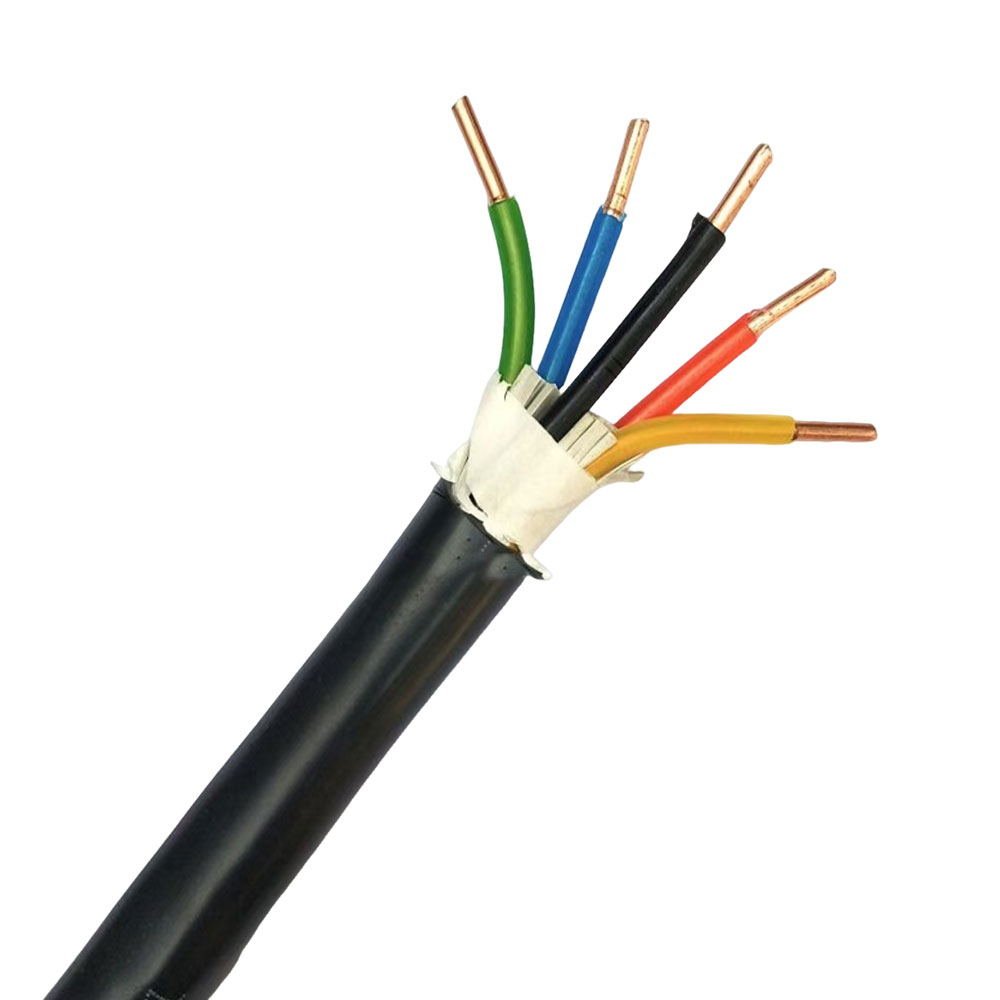
For versatile, indoor applications with light mechanical stress, engineers often choose a flexible multi-core YY PVC control cable. It performs exceptionally well in dry or damp conditions where continuous movement is not a factor. It is easy to strip, simple to terminate, and highly cost-effective for general facility wiring.
Continuous flex applications, like automated drag chains, demand specialized construction. These cables feature much finer copper stranding. They utilize specialized jacketing and internal fleece wraps. They must survive operating in cable tracks for millions of bending cycles per year. Standard flexible cables fail in these tracks within weeks due to severe mechanical fatigue.
The outer jacket material dictates the environmental survivability of the cable. Choosing the wrong polymer leads to rapid degradation.
PVC (Polyvinyl Chloride): This is the most cost-effective and standard material for indoor, moderate environments. It offers decent flexibility, basic moisture resistance, and good flame retardancy. However, it becomes brittle in sub-zero temperatures and breaks down when exposed to heavy machine oils.
PUR (Polyurethane): PUR delivers exceptional resistance to abrasion, tearing, and mineral oils. It is the ideal choice for harsh machining environments where cables drag across rough concrete or metal shavings. It maintains its flexibility even in very low temperatures.
TPE (Thermoplastic Elastomer): TPE offers superior performance in extreme temperature fluctuations. It excels in continuous flex applications. TPE outlasts PVC significantly in high-cycle drag chains, making it the premium choice for high-speed robotics.
You must match the cable's rated voltage to the equipment's maximum operational voltage requirements. Common industrial ratings include 300/500V, 450/750V, or 600/1000V. Using a 300V rated cable on a 600V circuit invites catastrophic insulation breakdown. The excess voltage punches through the polymer insulation, causing a dead short and potentially starting an electrical fire.
Next, you calculate the appropriate American Wire Gauge (AWG) or cross-sectional area (mm²). Base this calculation on the maximum current load and the acceptable voltage drop over the total run distance. Undersized conductors overheat quickly. This heat degrades the insulation rapidly and increases electrical resistance, further compounding the voltage drop. Always factor in ambient temperature derating when sizing conductors for hot industrial environments.
Every cable has a Minimum Bending Radius (MBR). This metric differs vastly for fixed installations versus flexible routing. Bending a cable tighter than its specified MBR stresses the outer jacket and crushes the inner conductors. This alters the electrical properties of the cable and guarantees premature mechanical failure.
There is a strict mathematical trade-off between cable diameter, bend radius, and expected lifecycle in moving applications. A larger diameter cable requires a proportionally larger bend radius. Forcing a thick, multi-core cable into a tight drag chain guarantees early mechanical failure. The outer jacket splits, and the internal cores corkscrew. Always consult the manufacturer's technical data sheet to verify the dynamic MBR before finalizing your cable track dimensions. Furthermore, when routing through fixed conduits, you must adhere to standard fill ratios, such as the NEC 40% fill rule. Overpacking a conduit prevents heat dissipation, which degrades cable insulation rapidly.
Proper specification requires a careful balance of performance and cost. Over-specifying wastes your project budget unnecessarily. For example, using an expensive PUR high-flex cable in a static HVAC system provides absolutely no added benefit. The cable never moves, rendering the high-flex properties useless.
Conversely, under-specifying guarantees premature failure and massive downtime costs. Installing standard PVC cable in a high-speed drag chain results in jacket rupture within weeks. The cost of replacing the failed cable, combined with the lost production time, far exceeds the initial savings of buying the cheaper PVC option. You must match the cable precisely to the application.
Follow these steps to specify your cable correctly:
Identify the exact operating voltage of the circuit to select the correct insulation rating.
Calculate the required conductor cross-section based on current draw and run length.
Determine the environmental hazards, including oil, chemicals, and extreme temperatures, to select the jacket material.
Assess the mechanical movement requirements to choose between solid, stranded, or high-flex conductors.
Evaluate the surrounding electromagnetic environment to specify the correct shielding type.
Cable Type | Shielding Method | Ideal Environment | Flexibility Level |
|---|---|---|---|
YY PVC Cable | Unshielded | Dry/Damp Indoor, Light Stress | Moderate (Static/Occasional Flex) |
CY Braided Cable | Tinned Copper Braid | High EMI, Automated Machinery | High (Continuous Flex options available) |
Copper Tape Shielded | Overlapping Copper Tape | High Frequency EMI, Fixed Routing | Low (Strictly Static Installation) |
SY Steel Braided | Galvanized Steel Wire | High Mechanical Impact Zones | Low to Moderate |
Cables in moving applications face severe mechanical stress daily. A common risk is the cable twisting on its own axis or the jacket rupturing entirely. Industry professionals call this catastrophic failure "corkscrewing." It happens due to improper tension during installation or incompatible bend radii in the cable track. The internal cores bind up, forcing the outer jacket to bulge and eventually tear open.
Another major risk occurs during the initial installation phase. Exceeding the maximum pulling tension stretches the copper conductors. This physical stretching reduces the cross-sectional area of the wire, which increases electrical resistance and causes localized heating. To mitigate this risk, strictly adhere to manufacturer bend radius and pulling tension guidelines. Utilize proper strain relief fittings at all termination points to prevent tension from transferring to the copper cores. Ensure proper cable track compartmentalization. Use physical dividers inside the drag chain so cables do not ride over one another or tangle during high-speed operation.
Routing control cables too close to high-voltage power lines introduces severe operational risks. The strong magnetic fields generated by power lines induce unwanted voltage into the adjacent control wires. This phenomenon, known as inductive coupling, leads to erratic machine behavior, false sensor readings, and dropped communication signals.
Enforce strict physical separation in your cable trays. Keep power and control lines in entirely separate conduits whenever possible. If they must cross, ensure they intersect at perfect 90-degree angles to minimize magnetic interference. Utilize appropriately grounded shielded cables to block induced interference effectively. A shield only works if you ground it properly at the control panel.
Using non-compliant cables exposes your facility to massive legal and financial liabilities. You risk failing municipal safety inspections, voiding expensive equipment warranties, or causing electrical fires. Insurance companies often deny claims if they discover uncertified wiring in the facility.
Verify all necessary certifications before procurement. Look for UL listings for North American markets and CE marks for European compliance. Ensure RoHS compliance to avoid hazardous substances. Check for NFPA 79 adherence for industrial machinery wiring. Matching the certification to the specific region and application ensures long-term operational legality and safety.
The effectiveness of a control cable depends entirely on matching its internal construction to your specific application. You must align the shielding type, flexibility rating, and jacket materials with the exact environmental and mechanical realities of the installation site. Ignoring these factors leads directly to signal loss and mechanical failure.
When shortlisting cables, evaluate your operational needs sequentially. First, assess environmental hazards like chemical exposure, oil presence, or extreme temperatures. Second, define the motion requirements, choosing carefully between static routing and continuous flex. Third, determine the presence of EMI to select the appropriate shielding method. Finally, calculate the electrical load to size the conductors properly.
Take the following next steps to ensure your automation project succeeds without costly delays:
Consult with a dedicated cable application engineer to verify your voltage drop and load calculations.
Review manufacturer technical data sheets meticulously to confirm dynamic bend radius specifications.
Request a physical cable sample for prototype testing in your actual drag chain or conduit layout.
Audit your current facility cable trays to ensure adequate physical separation between high-voltage power and low-voltage control lines.
A: YY cables are unshielded and used for environments with low interference. CY cables feature a tinned copper braid shield, protecting signals from electromagnetic interference (EMI). SY cables include a galvanized steel wire braid, offering robust mechanical protection against physical damage while providing basic EMI shielding.
A: Control cables are designed for low-voltage signal transmission and operational commands, not main power distribution. However, they can carry light power for small components like relays or solenoids, provided the current does not exceed the conductor's rated ampacity.
A: Use copper tape shielding for static, fixed installations where you need complete coverage against high-frequency EMI. Tape shields offer superior high-frequency protection but tear under continuous motion. Braided shields are required for moving applications to maintain necessary flexibility.
A: Industrial control cables typically carry voltage ratings of 300/500V, 450/750V, or 600/1000V. The exact rating you need depends entirely on the operational voltage of the connected equipment and regional electrical codes.
A: Calculate the correct bend radius by multiplying the cable's outer diameter by a factor specified by the manufacturer, often between 7.5 and 15. You must strictly maintain this minimum bending radius in cable tracks to prevent jacket rupture and conductor fatigue.
A: Solid core wiring is rigid and highly prone to breaking under vibration or repeated bending. A flexible multi-core YY PVC cable uses stranded copper conductors. This allows for easy routing through tight control panels and machinery without risking internal conductor fatigue.
A: EMI induces unwanted voltage into unshielded conductors. This distorts the low-voltage signals traveling through the control cable. It leads to false sensor readings, delayed actuator responses, and erratic, unpredictable machine behavior on the production line.


