
Views: 128 Author: Site Editor Publish Time: 2026-09-14 Origin: Site


High-stakes industrial environments require fail-safe electrical infrastructure. Standard polymer-insulated cabling simply cannot survive extreme conditions or direct fire events. Specifying the wrong cable for high-temperature, caustic, or fire-critical zones leads to catastrophic system failures. You risk severe compliance breaches, immediate safety hazards, and massive operational downtime. When critical circuits fail during an emergency, the consequences extend far beyond equipment damage. Facilities lose their ability to power smoke extraction fans, emergency lighting, and fire suppression pumps precisely when they need them most. Evaluating mineral insulated cable against traditional alternatives requires a rigorous understanding of its unique construction. You must analyze its performance thresholds, installation realities, and lifecycle value ratio. We will break down the exact anatomy of these specialized cables. You will learn how to specify them correctly, avoid common installation failures, and determine exactly when standard alternatives fall short in hazardous environments.
Construction Fundamentals: Mineral insulated cables rely on a strictly inorganic construction—typically annealed copper conductors, highly compacted magnesium oxide (MgO) insulation, and a seamless copper or alloy sheath.
Performance Baseline: Provides unmatched fire survival, continuous operation in extreme temperatures, high vibration resistance, and inherent zero-smoke/zero-halogen properties compared to standard organic cables.
Cost vs. Value: Higher upfront material and specialized installation costs are offset by extreme lifecycle longevity, mechanical durability, and the elimination of external conduit requirements.
Specification Criteria: Decision-makers must weigh the necessity of absolute fire survivability against the standard performance of alternatives like low-voltage copper power cable or XLPE insulated cables based on specific project risk profiles.
Solid, annealed copper serves as the standard conductor in these specialized systems. Manufacturers use solid cores rather than stranded wires. This maintains structural integrity during the extreme compression of the manufacturing process. Solid construction ensures high conductivity and predictable flexibility during field installation. The annealing process softens the copper. This allows electricians to bend the rigid cable around tight structural corners without fracturing the core. We see this frequently in dense industrial retrofits where routing space is minimal and pulling tension must be carefully managed.
Some critical process monitoring applications require different materials entirely. Engineers specify specific alloys for thermocouple wires used in extreme heat zones. These specialized alloy conductors handle massive temperature fluctuations without degrading signal accuracy. They ensure control rooms receive precise data from furnaces, reactors, and turbine exhausts. You cannot achieve this level of signal stability with standard copper under extreme thermal stress. The solid alloy core prevents micro-fractures that would otherwise disrupt sensitive telemetry data.
Dense, compacted MgO powder acts as a non-reactive, high-dielectric-strength insulator. It physically separates the conductors from each other and from the outer metallic sheath. This inorganic material does not burn, melt, or degrade at temperatures that would instantly vaporize standard plastics. It prevents conductor contact and maintains electrical integrity under severe thermal loads. The manufacturing process involves filling an oversized metal tube with loose MgO powder and the copper conductors, then drawing the entire assembly through a series of dies.
Magnesium oxide also provides exceptional thermal conductivity. It transfers heat efficiently away from the copper core and out through the metallic sheath. This thermal transfer allows the cable to carry higher current loads than equivalently sized polymer cables. The compaction process turns the loose MgO powder into a dense, rock-like structure. This solid mass locks the conductors firmly in place. It prevents any internal movement even during heavy vibration from industrial machinery, ensuring the insulation resistance remains stable over decades of use.
A continuous copper, stainless steel, or Alloy 825 outer sheath provides robust mechanical protection. Manufacturers draw this sheath down over the MgO and conductors. They compress the entire assembly into a solid unit. This seamless construction eliminates the need for external conduit in most applications. The metal tube acts as an impermeable barrier against moisture, gas, and chemical ingress. Installers can route the cable directly on trays, ladder racks, or surface-mounted unistrut without worrying about physical damage from ambient facility operations.
The sheath also serves a critical electrical function. It provides a highly effective, continuous ground path for the entire circuit. If a fault occurs, the massive cross-sectional area of the copper sheath safely carries the fault current back to the source. This integrated grounding mechanism simplifies installation. It enhances overall system safety in hazardous locations where stray currents can ignite explosive atmospheres. You eliminate the need to pull a separate grounding conductor, freeing up valuable space in tight routing scenarios.
These cables operate continuously at temperatures up to 250°C without any degradation of their electrical properties. Standard polymer cables begin to break down, off-gas, and lose insulation resistance well below this threshold. The inorganic construction allows facilities to route power directly through blast furnaces, boiler rooms, and high-heat manufacturing zones safely. Engineers do not have to design complex, heat-shielded routing paths. The cable itself acts as the thermal barrier, simplifying the overall electrical layout in heavy industrial plants.
They survive short-term fire events exceeding 1000°C. During a severe facility fire, the cable maintains circuit integrity for hours. This allows emergency systems to operate until the fire burns out or responders extinguish it. The copper sheath may oxidize and turn black. However, the internal MgO insulation and copper conductors remain fully functional. We rely on this characteristic for critical life-safety circuits where failure means loss of life. Firefighters depend on these circuits to keep communication repeaters and water pumps active during active suppression operations.
Compacted MgO and the metal sheath allow the cable to withstand severe impact. You can strike it with heavy machinery, and it will not short out. The dense internal structure prevents the conductors from shifting or touching the sheath. They handle heavy industrial vibration from generators, presses, and turbines without compromising electrical performance. Standard cables often suffer from insulation chafing when exposed to constant vibration. The solid-state nature of inorganic cables completely eliminates this failure mode.
Engineers often rely on the flattening test to demonstrate this durability. You can crush the cable to a fraction of its original diameter using a heavy press. As long as the outer sheath does not tear, the cable will still hold its rated voltage safely. This mechanical toughness makes it ideal for areas prone to physical abuse or seismic activity. Facilities located on fault lines use these cables to ensure emergency power systems survive the violent structural shifting associated with major earthquakes.
The seamless metallic sheath prevents the ingress of water, oil, and corrosive gases. This makes the cable highly suitable for hazardous, caustic, or petrochemical environments. Polymer jackets swell, crack, or dissolve when exposed to solvents. The solid metal tube remains completely unaffected by most industrial chemicals. Offshore oil rigs utilize this impermeability to protect critical circuits from constant salt spray and hydrocarbon exposure. The cable maintains its structural and electrical integrity regardless of the ambient chemical load.
For extreme corrosive environments, manufacturers apply an additional outer jacket over the copper sheath. They also use stainless steel and Alloy 825 sheathing. These specialized metals resist highly acidic or alkaline exposures. The cable requires no additional conduit for environmental protection. This simplifies routing through complex piping racks in refineries and chemical processing plants. You avoid the maintenance nightmare of draining condensation from standard conduit systems, as the seamless sheath leaves no internal voids for water to accumulate.
The absence of organic polymers means the cable emits no toxic gases or smoke when exposed to fire. Standard PVC cables release dense, black smoke and highly corrosive hydrogen chloride gas when they burn. This halogen gas turns into hydrochloric acid upon contact with moisture in the air or in human lungs. This zero-smoke characteristic is mandatory for confined space life-safety. Underground transit tunnels and subterranean mining operations rely on this property to prevent mass casualties during electrical fires.
It ensures visibility remains clear during emergency evacuations. It provides breathable air for occupants and first responders. The lack of corrosive off-gassing protects sensitive electronic equipment in adjacent server rooms or control centers from permanent acid damage. You avoid the secondary equipment destruction that typically follows a facility fire. When standard cables burn, the resulting acid vapor often destroys millions of dollars of unaffected IT infrastructure. Inorganic cables completely eliminate this secondary risk profile.
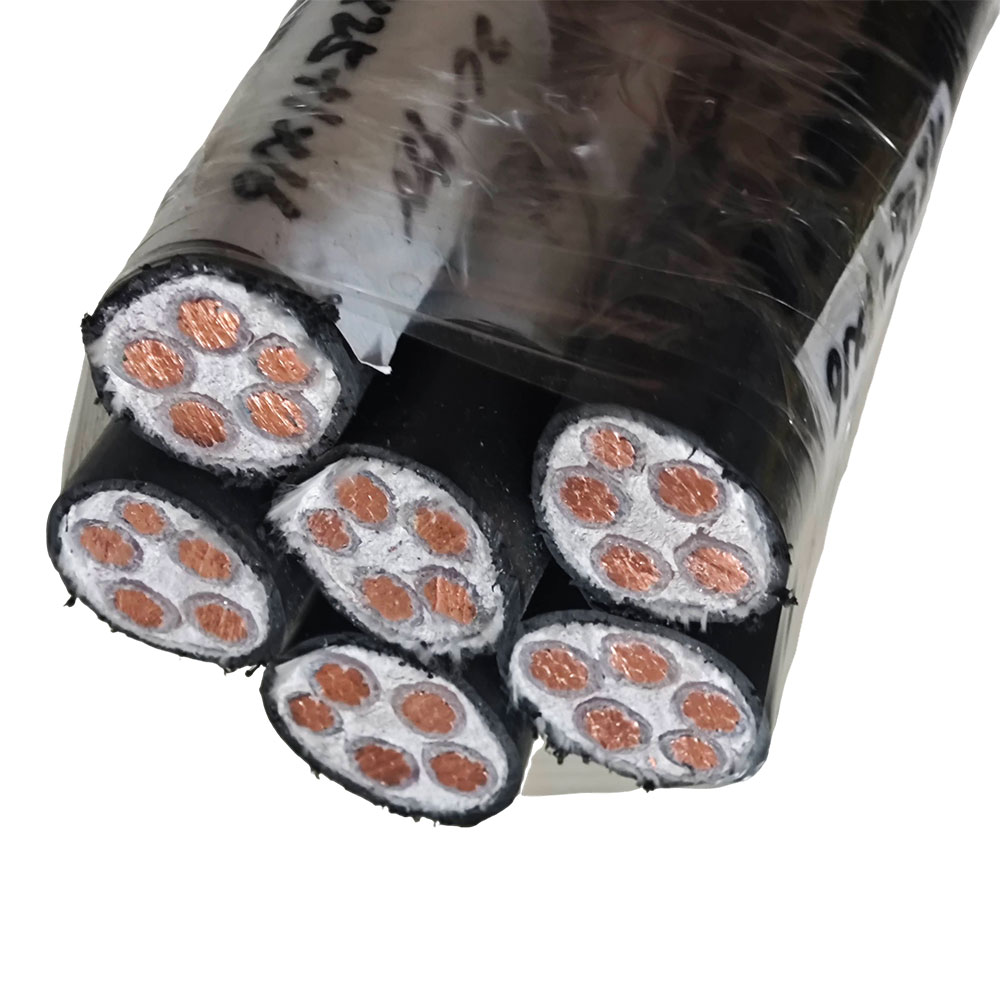
Engineers deploy these cables in emergency lighting, fire pumps, and smoke extraction systems. Building codes mandate strict circuit integrity during a fire for these specific applications. The cable guarantees power delivery when standard wiring fails. This ensures occupants can navigate stairwells and responders can utilize pressurized water systems. Modern high-rise construction relies on pressurized stairwells to keep smoke out during an evacuation. The massive fans required for this pressurization must have guaranteed power, making inorganic cabling the only logical choice.
Hospitals, high-rise towers, and underground transit stations rely heavily on this technology. In these environments, evacuation takes significant time. The electrical infrastructure must survive long enough to support a phased evacuation strategy. Inorganic cabling provides the only guaranteed method to maintain power to critical life-safety panels under direct flame exposure. Facility managers cannot risk a polymer cable melting and shorting out the emergency generator feed while patients are still being moved to safety.
Nuclear plants, aerospace facilities, and metallurgy operations rely on specialized thermocouple cables. They provide accurate temperature measurement in extreme environments. The robust construction prevents signal loss under severe stress. Operators need precise data to prevent reactor meltdowns or furnace explosions. Standard wiring would instantly vaporize in these zones, leaving control room operators blind to the actual conditions inside the combustion chambers. The solid metal sheath protects the delicate alloy conductors from the harsh external environment.
These monitoring cables use specific alloy pairs, such as Type K or Type N conductors. They are encased in the same compacted MgO and metal sheath. They route directly into the combustion zones of gas turbines. They monitor the skin temperature of critical reactor vessels. The inorganic insulation ensures the micro-volt signals remain free from interference, even at 1200°C. This continuous, accurate data feed allows automated safety systems to throttle fuel or trigger emergency shutdowns before catastrophic mechanical failures occur.
Explosive atmospheres require non-reactive, impermeable wiring to prevent ignition. Chemical plants and oil refineries contain zones where flammable gases are constantly present. The solid construction eliminates internal voids where explosive gases could travel. Standard conduit systems require complex pouring of seal-off fittings to prevent gas migration. These poured seals often fail over time due to structural vibration or improper installation. The seamless metal sheath of an inorganic cable provides a permanent, factory-sealed barrier that never degrades.
Approved explosion-proof glands ensure safe termination in these hazardous zones. The seamless metal sheath acts as a perfect barrier. It prevents any internal electrical arc from igniting the external atmosphere. This makes it the preferred wiring method for Class I, Division 1 environments where safety margins are absolute. Electricians can route the cable directly from a safe zone into the blast zone without installing heavy, threaded rigid metal conduit, drastically reducing installation time and structural weight.
Standard low-voltage copper power cable works well for conventional routing in climate-controlled commercial buildings. It provides excellent conductivity and flexibility for standard power distribution. It cannot meet stringent fire-rating, vibration, or mechanical protection mandates without extensive external protection. When you route standard cables through a fire zone, you must encase them in heavy, fire-rated enclosures or bury them in concrete. This adds significant weight and spatial requirements to the project.
Inorganic cable serves as the necessary upgrade when baseline operational limits are exceeded. It provides a self-contained, fire-proof solution that requires a fraction of the installation space. You eliminate the need for bulky fire-wrap materials or specialized gypsum enclosures. The cable itself is the fire barrier. This allows architects to maximize usable square footage in dense urban construction projects while still meeting the strictest local fire codes for emergency power distribution.
YJV copper cable is sufficient for standard commercial routing. It handles normal environmental fluctuations and provides reliable power transmission for general building loads. It fails rapidly under extreme thermal loads and caustic exposures. The organic insulation in YJV cables melts and combusts at high temperatures. Once the insulation burns away, the bare copper conductors touch, causing an immediate short circuit that trips the upstream breaker and kills the circuit.
The inorganic MgO thrives under fire conditions. It never melts. It never burns. It maintains the physical separation of the conductors regardless of the external thermal load. While YJV is perfect for feeding standard office lighting or HVAC units, it has no place in a blast furnace control room or a high-rise fire pump circuit. You must match the physical properties of the cable insulation to the worst-case environmental scenario of the specific routing path.
Contrast the organic insulation of 0.6/1kV XLPE insulated copper cable with the inorganic MgO of MI cable. Base your specification decisions on absolute fire survivability, conduit requirements, and space constraints. Use XLPE for low-risk environments, underground duct banks, and standard power feeds where fire exposure is minimal. XLPE provides excellent moisture resistance for direct burial applications and handles standard industrial loads perfectly when protected by rigid conduit.
Specify inorganic cables for critical life-safety circuits, historic building retrofits, and explosive environments. If a circuit failure during a fire would result in loss of life or catastrophic facility damage, you cannot rely on organic polymers. The decision framework must prioritize survivability over initial material expenditure. When routing through a historic masonry building where conduit would destroy the aesthetics, the slim profile of a bare copper inorganic cable provides an invisible, code-compliant solution.
Feature / Metric | Mineral Insulated Cable | Standard XLPE / YJV Cable |
|---|---|---|
Insulation Material | Magnesium Oxide (Inorganic) | Cross-linked Polyethylene (Organic) |
Fire Survivability | Exceeds 1000°C for hours | Melts and combusts at high heat |
Conduit Required | No (Self-contained metal sheath) | Often required for physical protection |
Mechanical Strength | Extremely high (Crush resistant) | Moderate (Vulnerable to impact) |
Smoke Generation | Absolute Zero | Varies (High in standard PVC jackets) |
Moisture Resistance | Impermeable (Seamless tube) | Resistant but permeable over time |
The metallic sheath and MgO insulation allow these cables to operate safely at higher current densities. They dissipate heat faster than equivalently sized polymer cables. The inorganic materials do not degrade when the copper core runs hot. This superior thermal management allows engineers to push more current through a smaller conductor. Standard polymer cables require massive derating when routed through high ambient temperature zones to prevent the insulation from melting.
This allows you to specify a smaller cross-sectional area for the same current load compared to standard wiring. A smaller cable reduces the overall weight on cable trays and structural supports. It makes routing through congested ceiling spaces significantly easier. You must consult specific manufacturer ampacity charts. They differ substantially from standard NEC or IEC polymer cable tables. Applying standard polymer ampacity tables to inorganic cables will result in vastly oversized and unnecessarily heavy installations.
Evaluate compliance through critical lenses like IEC 60331, BS 6387, and UL 2196. Verify manufacturer testing data rigorously. These standards do not just test for heat resistance. They test for survivability under real-world fire conditions. This includes mechanical shock and water spray from fire hoses. A cable that survives heat but shatters when hit by a firefighter's hose stream is useless in a real emergency.
The BS 6387 CWZ classification is a prime example. It requires the cable to survive a 950°C fire for three hours. It must then survive fire combined with water spray. Finally, it must survive fire combined with heavy mechanical shock. Only true inorganic cables pass these rigorous, multi-factor survival tests consistently. When reviewing submittals, you must demand the actual laboratory test reports to confirm the cable meets the specific CWZ rating required by your local fire marshal.
The lack of conduit and smaller overall diameter solve spatial constraints in dense structural retrofits. Historic buildings often lack the ceiling space for massive fire-rated enclosures. You can route these slim, self-contained cables directly against masonry or structural steel. They blend into the architecture while providing maximum protection. You avoid the need to core-drill massive holes through structural beams, preserving the physical integrity of the building.
You can bend the cable tightly around corners. The seamless sheath maintains integrity even at the minimum bending radius. Electricians use specialized bending tools to create precise, uniform offsets. The compacted MgO prevents the sheath from kinking or collapsing during these tight bends. This ensures the internal conductors remain perfectly centered. Proper bending techniques prevent the outer sheath from thinning out, maintaining the full mechanical and electrical rating of the system through complex routing paths.
Terminating these cables involves significant technical complexity. You cannot simply strip the jacket and land the wires on a breaker. You need specific brass glands, potting seals, and specialized tools. Proper termination maintains system integrity and prevents moisture ingress. The process requires precision and patience. Rushing a termination guarantees a failed insulation resistance test and requires the installer to cut the cable back and start over.
Follow these exact steps for proper termination:
Score and strip the copper sheath using a specialized ringing tool to expose the internal conductors without nicking the copper.
Slide a brass seal pot over the exposed conductors and thread it tightly onto the remaining copper sheath.
Fill the seal pot with a specialized insulating potting compound to replace the removed MgO powder.
Crimp a sealing disc into place to lock the compound inside the pot and block ambient air.
Apply insulating sleeving over the bare copper wires to prevent shorting at the breaker terminals.
Magnesium oxide is highly hygroscopic. It absorbs moisture rapidly from the ambient air. If you leave a cut end exposed, the MgO will draw water deep into the cable within minutes. This moisture drastically lowers the insulation resistance, leading to potential short circuits when energized. A cable left open overnight in a humid environment will absorb enough water to completely ruin the first several feet of the run.
You must seal cut ends immediately to prevent insulation resistance failure. Installers use temporary sealing putty or heat-shrink caps the moment they make a cut. Before applying the final permanent termination, they must test the cable with a 500V Megger. This ensures the insulation resistance remains above acceptable thresholds. If moisture has entered, they must use a blowtorch to heat the copper sheath and drive the moisture out before sealing the end.
Installation requires specialized labor. You must utilize contractors specifically trained in handling these systems. Standard commercial electricians often lack the specific tooling and experience required to terminate inorganic cables successfully. The learning curve is steep, and mistakes are costly. We highly recommend requiring contractors to complete a mock-up termination for QA/QC approval before they touch the actual project materials.
This mitigates installation-induced failures and ensures long-term reliability. When budgeting for a project, you must account for the increased labor hours required for precise routing, bending, and termination. Utilizing uncertified labor frequently results in failed insulation tests and expensive rework. You must verify contractor credentials and inspect their specialized tooling before allowing them to cut or terminate these specialized systems on your job site.
Audit your facility's environmental risk factors to identify specific zones requiring absolute fire survivability and chemical resistance.
Consult directly with certified manufacturers to determine precise sizing requirements and secure the correct termination kits for your specific application.
Verify that your selected electrical contractors hold current certifications and possess the specialized tooling required for handling and terminating inorganic cabling.
Reserve premium inorganic cables strictly for critical life-safety circuits and hazardous locations while deploying standard polymer alternatives in conventional routing to optimize your project budget.
A: In the electrical industry, it is frequently referred to as MI cable, MICC cable, or pyro cable. These terms all describe the exact same inorganic construction designed for extreme fire survival, mechanical durability, and hazardous location deployment.
A: These cables support continuous operating temperatures up to 250°C. During short-term fire events, they can survive direct flame temperatures exceeding 1000°C for several hours without losing electrical integrity or degrading the internal inorganic insulation.
A: Magnesium oxide provides exceptionally high thermal conductivity and excellent electrical insulation. It is a non-combustible, non-reactive inorganic material that prevents conductors from touching while efficiently dissipating heat away from the core to the outer sheath.
A: MI cable uses strictly inorganic materials that do not melt, burn, or off-gas, maintaining circuit integrity in extreme heat. XLPE cable uses combustible, organic polymers that will melt, burn, and eventually fail when exposed to direct fire.
A: No. The seamless metal sheath acts as its own conduit. It provides robust mechanical protection, serves as a continuous ground path, and acts as an impermeable barrier against moisture and chemicals without needing any external piping.
A: A breached sheath exposes the highly hygroscopic magnesium oxide directly to the air. It will rapidly absorb ambient moisture, causing a severe drop in insulation resistance. This compromises the dielectric strength and can lead to a short circuit.


